Why CNC Mandrel Bending Beats Crush-Bent Exhausts (And How We Build Yours)
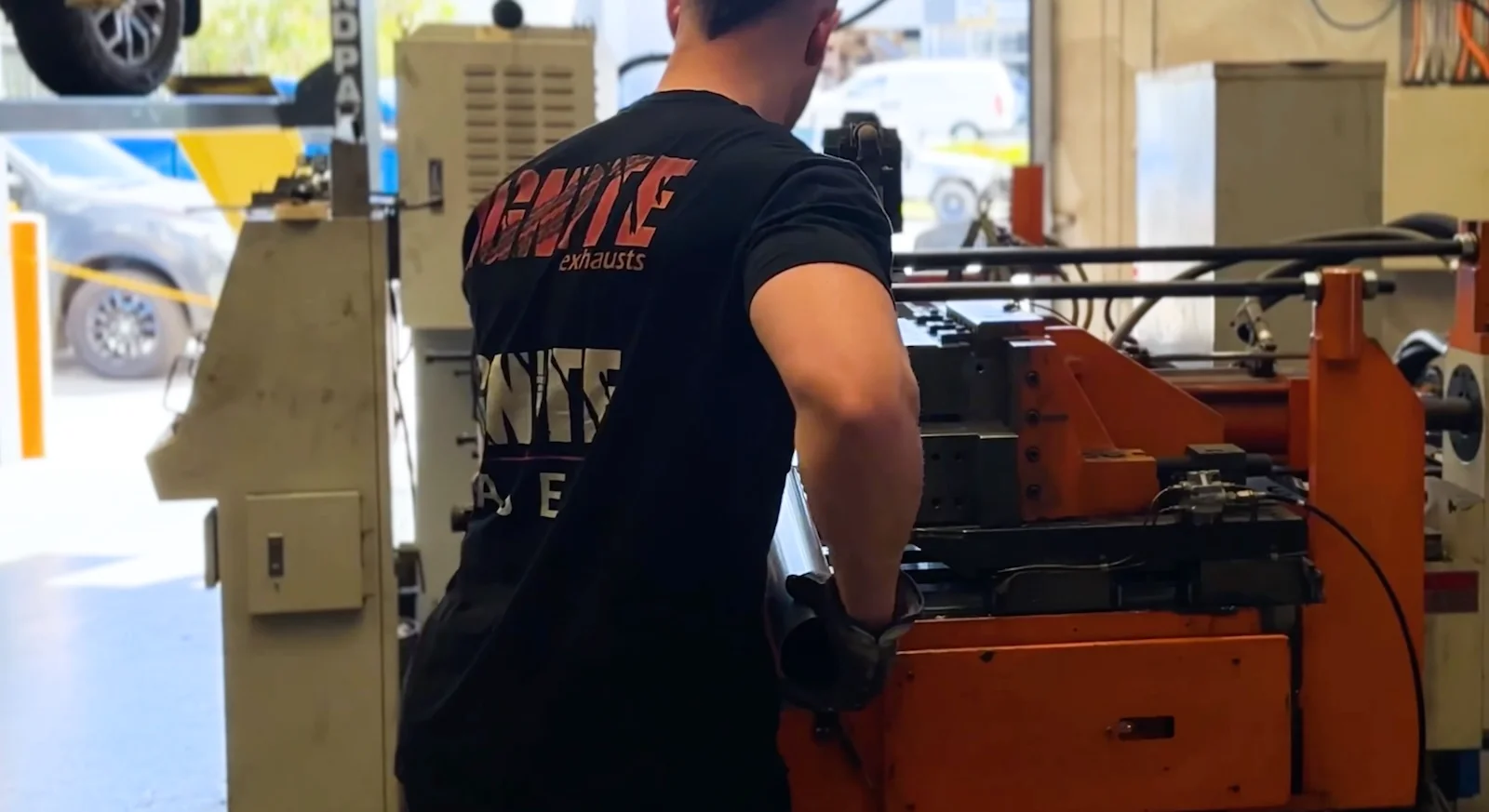
A mandrel bent exhaust keeps the pipe fully round and at its full diameter through every bend. A crush-bent exhaust squashes the pipe as it bends, so each bend becomes a narrower, rougher choke point. On a turbo diesel 4x4, that means mandrel bends let exhaust gas leave freely, while crush bends quietly add restriction you paid to remove.
What is mandrel bending?
When you bend a steel tube, the outside of the bend stretches and the inside compresses. Left unsupported, the tube flattens and wrinkles. Mandrel bending stops that by sliding a solid support (the mandrel) inside the tube while the machine bends it. The tube is held in shape from the inside, so it comes out round, smooth and the same diameter it went in.
As our mandrel bends and tube range puts it: mandrel bends keep the full pipe diameter through the bend.
What is crush bending?
Crush bending (also called press bending) forces the tube around a die with nothing supporting it inside. It is quick and cheap, which is why it still turns up on budget systems and quick workshop jobs. The catch is what happens to the pipe:
- The tube ovals or flattens through the bend, so the inside area shrinks.
- The inside of the bend often wrinkles or kinks.
- Gas has to squeeze through the narrow section and tumble over the wrinkles.
So a "3 inch" crush-bent system is only 3 inch on the straight sections. Every bend is smaller than that.
Why does it matter on a 4x4?
Most modern utes and 4WDs are turbo diesels, and the exhaust has to snake around the chassis, gearbox and spare wheel. That means plenty of bends. Each crushed bend adds restriction, and the losses stack up along the system.
Mandrel bends give you:
- Better flow. Gas moves through a smooth, full-size pipe instead of a series of pinch points. That is the whole reason to fit a bigger exhaust in the first place.
- Consistent fitment. CNC mandrel bending repeats the same angles every time, so the system lines up with the hangers and clears the chassis.
- A stronger pipe. Crushing thins and creases the metal at the bend. A mandrel bend keeps an even shape with no creases to crack or hold moisture.
- A cleaner sound. Fewer sharp disruptions inside the pipe usually means a smoother, less raspy note.
How can you tell the difference?
Look at the inside of each bend. A mandrel bend is smooth and evenly round. A crush bend usually shows ripples or a flattened, slightly oval section. If you can't see the bends, ask the seller directly whether the system is mandrel bent.
Is mandrel bending worth the extra cost?
If you are upgrading for flow, towing or touring, yes. Fitting a larger diameter exhaust and then crushing it at every bend undoes much of the benefit. For a straight replacement on a stock vehicle, the difference matters less, but you still get better fitment and a longer-lasting pipe.
Material counts too. Our Ignite Exhausts 4x4 systems are CNC mandrel bent in 409 stainless steel, and the 409 stainless range comes with a 10-year warranty.
How we build yours
Ignite Exhausts is our own in-house brand, CNC mandrel bent in 409 stainless steel at our Sunbury facility.
Building a system yourself or repairing an existing one? Our Premium Mandrel Bends Extractor Kits help you keep full diameter through every turn.