Cat-Back, DPF-Back, Turbo-Back Explained: Which 4x4 Exhaust Do You Need?
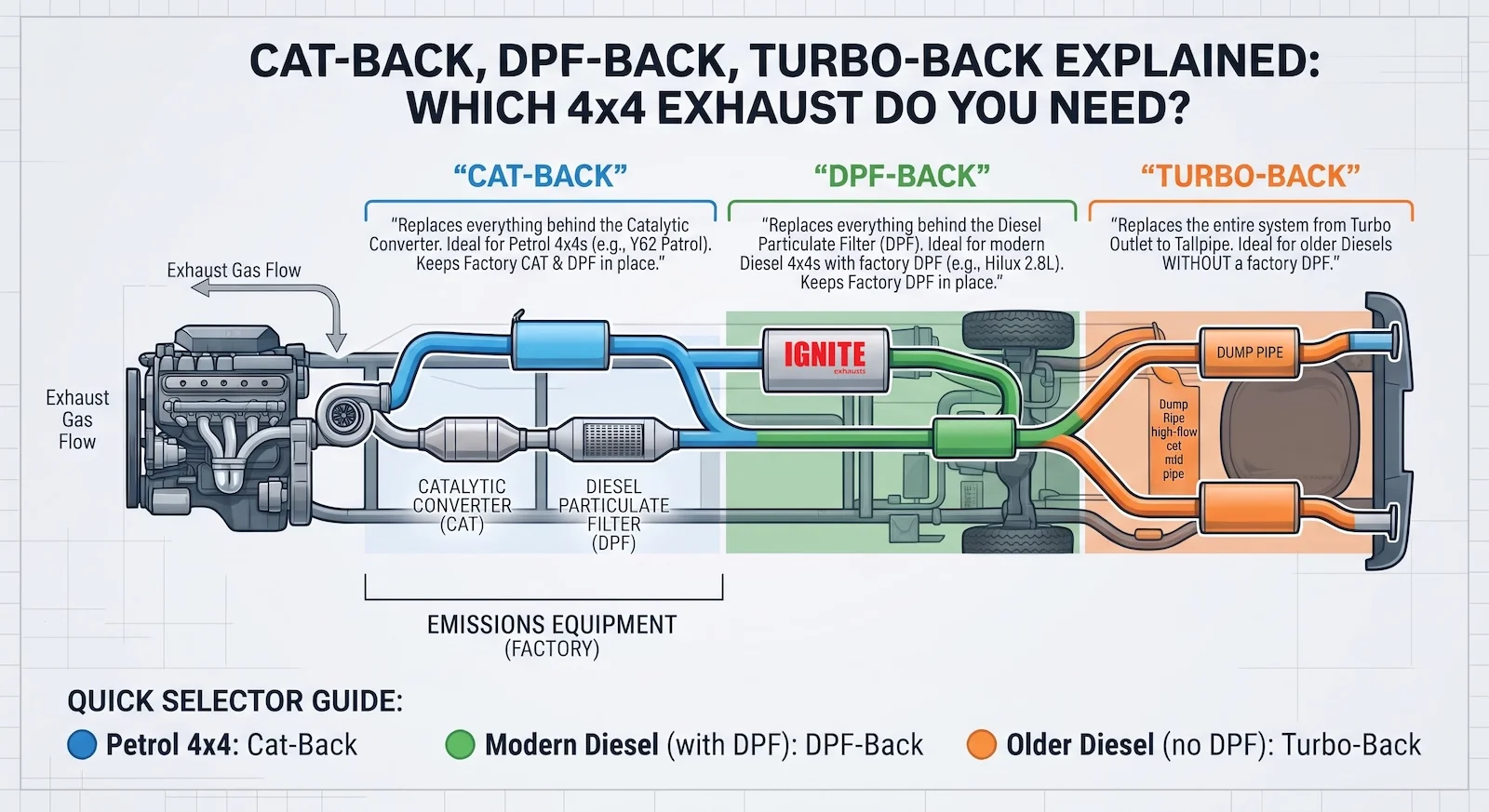
The name tells you where the new exhaust starts. A cat-back replaces everything behind the catalytic converter, a DPF-back replaces everything behind the diesel particulate filter (DPF), and a turbo-back starts right at the turbo outlet. For most late-model diesel utes and wagons with a DPF, a DPF-back is the system designed for your vehicle.
What's actually under your 4x4?
Exhaust gas leaves the engine, spins the turbo on a diesel, then passes through the emissions equipment before heading out the back. Depending on the vehicle, that can be a catalytic converter, a DPF, or both. Behind those sit the mid pipe, any muffler or hotdog, and the tailpipe.
Each system type is simply named after the point where it bolts on.
What is a cat-back exhaust?
A cat-back keeps the factory catalytic converter and replaces the pipework, mufflers and tailpipe behind it. You'll mostly see them on petrol vehicles.
For example, our Ignite cat-back for the Y62 Patrol Series 5 replaces the mid and rear sections on the 5.6L V8 with 3" mandrel-bent pipe, with muffler and hotdog options so you can pick the sound.
What is a DPF-back exhaust?
Most diesel 4x4s sold in recent years have a DPF, which traps soot before it leaves the tailpipe. A DPF-back bolts on after the filter, so the DPF and everything ahead of it stay in place and keep doing their job.
Take our Ignite 3" DPF-back for the Hilux 2.8L. A new DPF pipe bolts to the factory filter, followed by a centre pipe, muffler section and tailpipe. It's listed as suiting DPF models only, which is exactly what you want to see on a DPF-back listing.
What is a turbo-back exhaust?
A turbo-back replaces the whole system, from the turbo outlet to the tailpipe. That usually means a new dump pipe, a catalytic converter section (often a high-flow cat), then the mid pipe, muffler or hotdog, and tailpipe.
Turbo-backs are built for diesels that came from the factory without a DPF, such as many older utes and wagons. Our earlier post What's a Turbo-Back Exhaust? walks through each component in more detail.
Which one suits my 4x4?
- Petrol 4x4: a cat-back.
- Diesel with a factory DPF: a DPF-back. Check the listing says it suits DPF models.
- Older diesel built without a DPF: a turbo-back, with a cat section if your vehicle came with a converter.
Not sure whether your vehicle has a DPF? Your owner's manual will say, or our team can check it against your model and build date. Many models changed partway through a series, so the build date matters.
What do I get from upgrading?
Most owners upgrade for a deeper sound, a tougher look and a system that lasts. Mandrel bending keeps the pipe the same diameter through every bend instead of squashing it, so gas flows more freely. Choosing the material matters too: 409 stainless resists rust far better than plain steel, which counts on a 4x4 that sees mud, water and beach runs.
On our Ignite range, 409 stainless systems carry a 10-year warranty and aluminised systems carry a 2-year warranty.
The bottom line
Match the system to where your emissions equipment ends: cat-back behind the converter, DPF-back behind the filter, turbo-back for vehicles built without a DPF. Browse the Ignite 4x4 exhaust range, our own in-house brand made at our Sunbury facility, or ask our team which system suits your build. We're a family-owned business with over 60 years of combined experience, and orders over $200 ship free (conditions apply).