With the popularity of performance upgrades using engine management and larger exhausts, Safari 4x4 Engineering took the decision to design a snorkel system that not only raised the air intake to prevent ingesting harmful elements to the vehicles air cleaner, but also would be able to deliver the necessary volume of air into the engine, therefore maximising the performance enhancements potential.
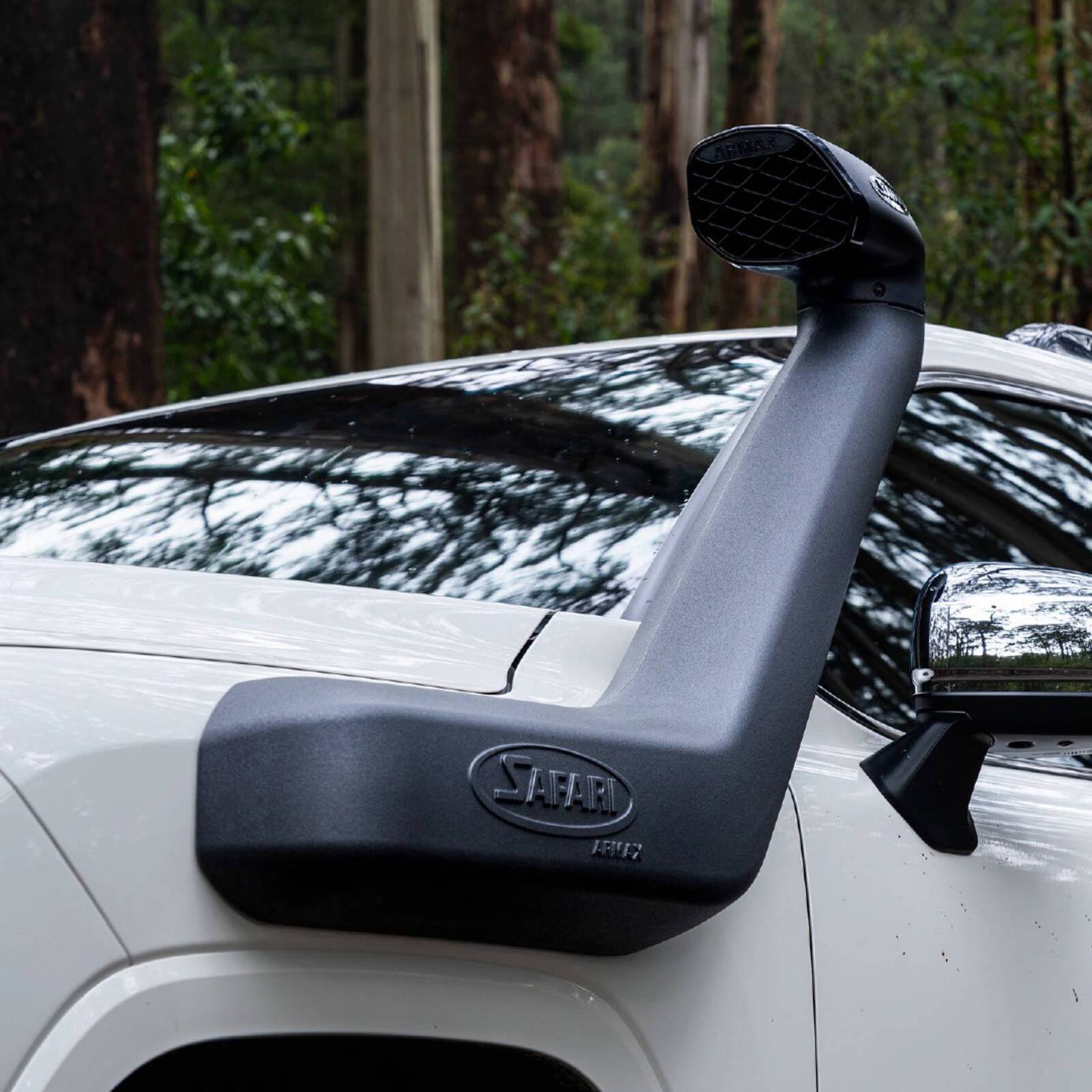
Huge air flow is but one aspect of the ultimate snorkel design suitable for the Toyota LandCruiser 300 Series 3.3L V6 Twin-Turbo Diesel (F33A-FTV) Engine. The Safari ARMAX snorkel air ram is designed to perform two very important roles. The most obvious is to funnel cool clean air into the snorkel body - but just as importantly, the Safari ARMAX air ram acts as a highly efficient water separator to remove rain water from the incoming air stream - thus ensuring safe engine operation through even the most torrential tropical storms.
Safari's NEXT GENERATION 4" Air Ram with an optimised airflow, low restriction grill
Australian designed, moulded and manufactured
Design and flow tested by our in-house engineers for maximum performance
Raised air intake to prevent your engine from ingesting harmful elements
Water separating air ram design to remove water from the air stream
Durable and UV stable snorkel and air ram for added strength
Lifetime Warranty
Please note: The SS98HP is suited to fit all models, excluding GX models with factory raised air intake. You can use supplementary kit SS98HPOER in partnership with this snorkel to suit these vehicles.
One of the things that come under the microscope quite frequently among car enthusiasts is the sound of the vehicle. While the engine does play a critical role in determining the kind of sound that a car ends u
Why Choose an IGNITE Performance Exhaust?
When it comes to upgrading your 4x4 or performance vehicle, choosing the right exhaust system can make all the difference. IGNITE Exhausts are purpose-built for Aust
Catalytic converters have long been a critical component of modern vehicles, primarily tasked with reducing harmful emissions. They work by converting toxic gases like carbon monoxide, nitrogen oxides, and hydr

 More info